For international tile buyers, understanding the production timeline is essential when planning a residential, hotel, commercial, or construction project. One common question is: How long does it take to produce a custom porcelain tile order?
In most cases, a straightforward custom order takes around 15–20 days for factory production after the product specifications, design, quantity, and other order details have been confirmed. However, the complete lead time can vary depending on customization requirements, sample approval, packaging, production capacity, and shipping arrangements.
Understanding each stage of the process can help buyers plan their purchasing schedule more accurately and avoid unnecessary delays.
What Is a Custom Porcelain Tile Order?
A custom order does not always mean developing a completely new tile from scratch. Customization can involve modifying an existing product or developing a new design according to the buyer's requirements.
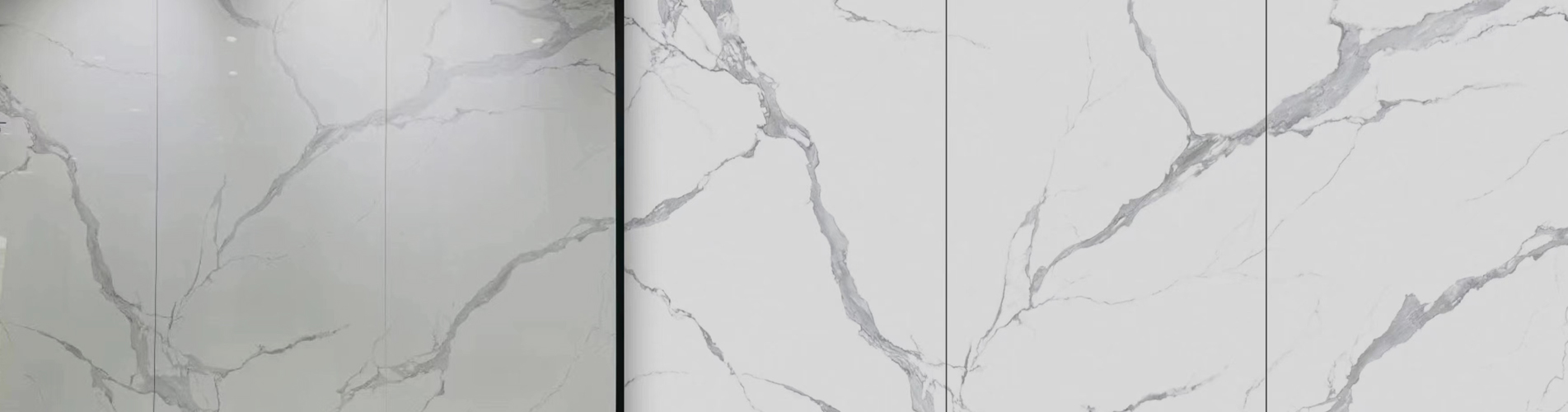
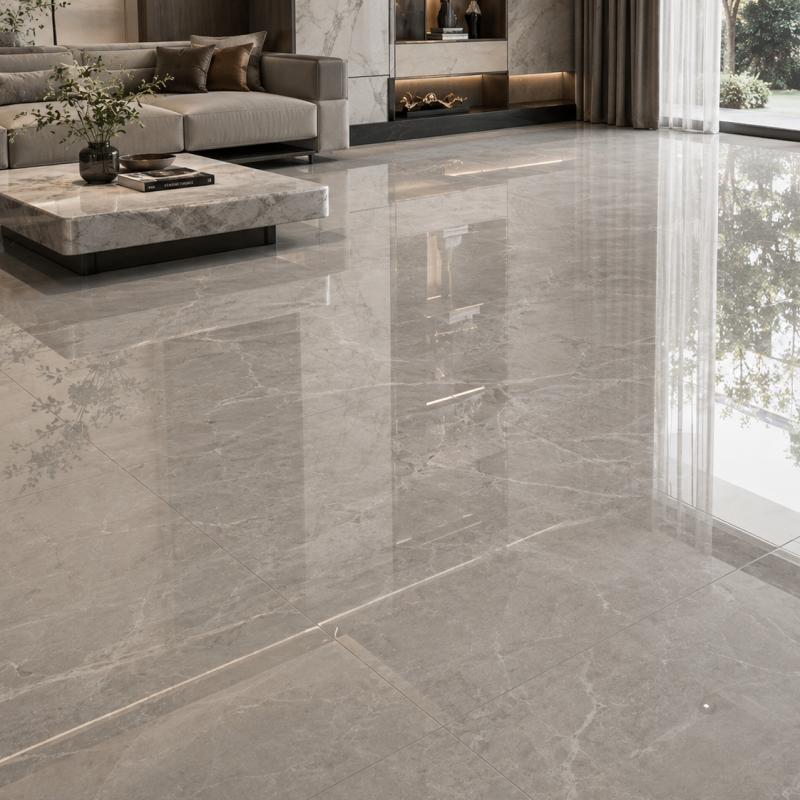
Common customization options include tile size, surface finish, color, pattern, printing method, packaging, and branding. For example, a buyer may select a marble-look design and request it in a 600×1200 mm format, while a distributor may require its own brand name and packaging.
For buyers sourcing custom porcelain tile, the production timeline therefore depends not only on manufacturing but also on the preparation and approval stages before production begins.
Step 1: Confirming Product Specifications
The first stage is confirming the complete product specification with the manufacturer. This normally includes tile size, material, water absorption, surface finish, design, quantity, packaging, and other technical requirements.
For example, a project may require 600x1200 porcelain tile with a matte finish, while another customer may need a glossy surface with a marble-look pattern.
It is important to confirm these details before production starts. Changes made after production has begun may require adjustments to the production schedule and can increase the lead time.
Step 2: Design and Sample Approval
If the buyer chooses an existing factory design, production preparation can usually be completed relatively quickly. However, a completely new design may require artwork preparation and sample development.
For a custom tile order, the sample approval stage allows buyers to check important details such as color, pattern direction, pattern density, surface effect, and overall appearance.
This step is particularly important for large projects because even a small difference between the approved design and mass-produced product can affect the appearance of an entire installation.
When the sample and specifications are confirmed, the manufacturer can move forward with mass production.
Step 3: Mass Production
Once all specifications have been approved, the factory begins production.
For many standard orders, the factory production period is approximately 15–20 days. The exact time depends on the tile type, size, quantity, production schedule, and customization requirements.
The manufacturing process generally includes raw material preparation, forming, drying, glazing or surface treatment, digital printing, firing, sorting, quality inspection, and packing.
Modern porcelain tile manufacturing requires careful control of temperature, pressure, moisture, printing, and firing conditions. Large orders also need to be scheduled around the factory's existing production capacity.
Does Tile Size Affect Production Time?
Tile size can influence both production preparation and packaging requirements.
Common sizes such as 600×600 mm and 600×1200 mm are widely used in residential and commercial projects. Larger formats require careful control of flatness, dimensions, edges, surface consistency, and packaging protection.
For example, large format porcelain tile may require stronger packaging and more careful handling during sorting and container loading.
This does not necessarily mean that a larger tile always takes much longer to manufacture, but its production and packing requirements can be different from smaller formats.
Does Custom Packaging Add Extra Time?
Yes, depending on the requirements.
Standard factory packaging is generally easier to prepare. However, buyers requesting custom tile packaging may need additional time for carton artwork, logo placement, product information, barcode labels, and other markings.
For an OEM project, packaging artwork can often be prepared in advance and approved before production. If new packaging needs to be designed and printed, additional preparation time may be required.
For distributors developing their own tile brand, customized packaging can be an important part of the overall order.
How Do OEM and ODM Orders Affect Lead Time?
OEM and ODM orders can involve different levels of customization.
With OEM porcelain tile, the buyer may provide a brand name, logo, packaging design, or specific product requirements while the manufacturer handles production.
ODM projects can involve more product development. The manufacturer may modify an existing design or develop a product according to the buyer's market requirements.
A simple OEM order using an existing tile design can usually proceed faster than a completely new ODM product requiring multiple rounds of development and approval.
Therefore, buyers should distinguish between customizing an existing product and developing a completely new product when discussing the production schedule with a tile manufacturer.
What Can Cause Production Delays?
Although 15–20 days is a common production estimate for straightforward orders, several factors can extend the timeline.
Design changes are one of the most common causes. Repeated changes to colors, patterns, sizes, or surfaces may require the factory to adjust its production plan.
Sample approval can also affect the schedule. If production cannot begin until the buyer approves a sample, slow communication may delay the entire order.
Custom packaging may require additional time for artwork confirmation and printing.
Large-volume orders may need to be scheduled carefully according to factory capacity.
Finally, the factory's existing production schedule can affect the available production slot, particularly during busy periods.
How Can Buyers Make Production More Efficient?
Buyers can reduce unnecessary delays by preparing complete information before placing an order.
First, confirm the tile size, surface, design, quantity, packaging, and branding requirements as early as possible.
Second, review samples and packaging artwork promptly. Fast communication between the buyer and manufacturer can significantly improve the overall efficiency of the order.
Third, avoid making unnecessary changes after production has started.
It is also helpful to work with an experienced porcelain tile manufacturer that understands international B2B orders and can clearly explain production requirements, packaging, quality inspection, and loading arrangements.
Production Time vs. Total Delivery Time
One important point for international buyers is that production time is not the same as total delivery time.
A typical order may follow this sequence:
Product confirmation → Sample approval → Production → Quality inspection → Packing → Container loading → Sea freight → Customs clearance → Local delivery
Therefore, if the factory estimates 15–20 days for production, buyers should not assume that the goods will arrive at their warehouse immediately after that period.
For customers purchasing wholesale porcelain tile for hotels, residential developments, commercial buildings, or other projects, shipping schedules and customs clearance should be considered from the beginning.
What Should Buyers Confirm Before Ordering?
Before placing a custom order, buyers should ask the manufacturer:
What is the estimated production lead time?
When does the production period officially begin?
Is a sample required before mass production?
How long will sample approval take?
Can the factory provide OEM or ODM services?
Can custom packaging be provided?
What is the minimum order quantity?
How will the tiles be packed for export?
When will quality inspection be completed?
When can the container be loaded?
These questions help buyers understand the difference between factory production time and the complete order lead time.
Final Thoughts
So, how long does it take to produce a custom porcelain tile order?
For a straightforward order, factory production generally takes around 15–20 days after the product specifications and order details are confirmed. More complex projects may require additional time for new designs, samples, custom packaging, OEM or ODM development, or special quality requirements.
The best way to keep the schedule on track is to confirm product details early, approve samples and artwork quickly, and communicate the required delivery date with the manufacturer before production begins.
For international buyers sourcing porcelain tile, ceramic tile, and customized tile products, understanding the complete production process makes it easier to plan purchasing, shipping, inventory, and installation.
A clear production schedule is not simply about counting factory production days. It is about coordinating every stage from product confirmation to final container loading.
FAQ
1. How long does custom porcelain tile production take?Most straightforward custom porcelain tile orders take around 15–20 days after all specifications and designs are confirmed.
2. Can I customize the porcelain tile design?Yes. Buyers can customize designs, colors, patterns, sizes, and surface finishes according to project requirements.
3. Can custom porcelain tiles be made in 600x1200mm?Yes. 600x1200mm porcelain tile is a common format for residential, commercial, and project applications.
4. Does custom packaging increase the production time?It can. New carton artwork, branding, labels, and printing may require additional preparation time.
5. Do OEM and ODM porcelain tile orders take longer?It depends on the level of customization. Existing-product OEM orders can be relatively quick, while new ODM designs may require additional development and sample approval.
 How Long Does It Take to Produce a Custom Porcelain Tile Order?









 IPv6 دعم الشبكة