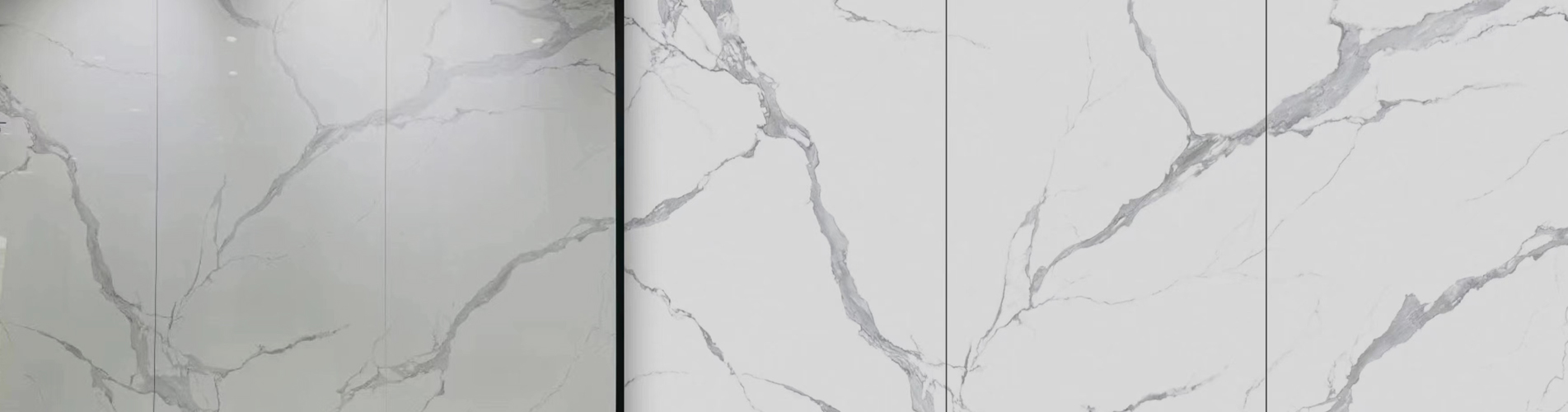
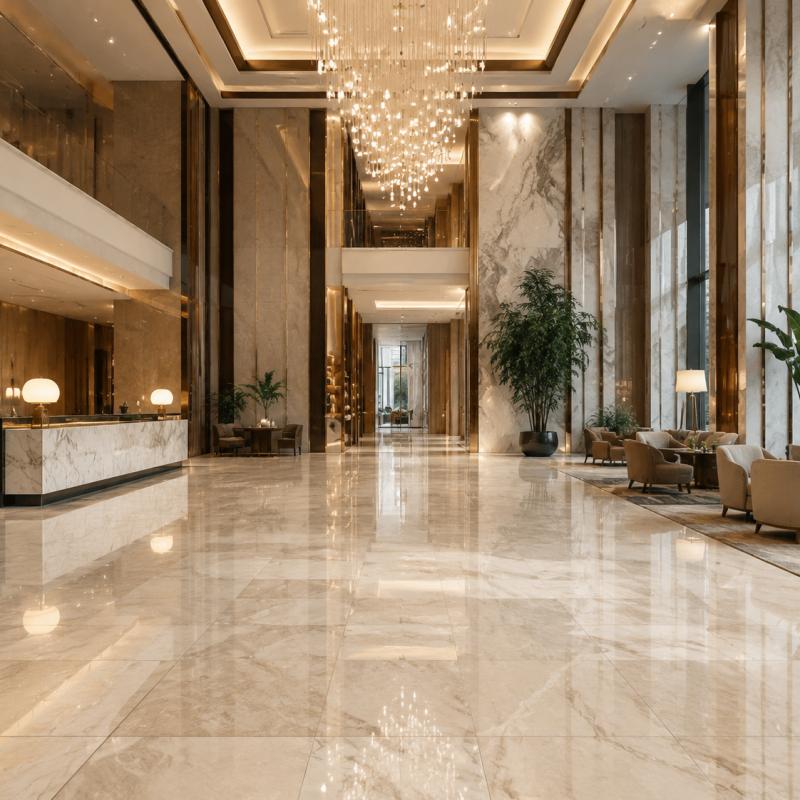
تُشكّل ردهة الفندق الانطباع الأول الذي يتكوّن لدى النزلاء عند دخولهم، لذا يلعب نوع الأرضيات دورًا محوريًا في تحديد طابع المكان. يجب أن يوازن بين الجمال والمتانة والسلامة وسهولة الصيانة، مع مراعاة هوية العلامة التجارية للفندق. إن اختيار الأرضيات المناسبة ليس مجرد قرار تصميمي، بل هو استثمار طويل الأجل في الأداء الوظيفي وتجربة النزلاء. 1. المتانة تأتي أولاً في الأماكن ذات الحركة المرورية العاليةتشهد ردهات الفنادق حركة مرور مستمرة من النزلاء وعربات الأمتعة وحركة الموظفين. ولذلك، يجب أن تكون الأرضيات متينة للغاية ومقاومة للتآكل.أحد الخيارات الأكثر توصية هو بلاط أرضيات تجاريوخاصةً مواد البورسلين عالية الكثافة. صُممت هذه البلاطات لتحمل الأحمال الثقيلة دون أن تتشقق أو تفقد مظهرها النهائي. وبالمقارنة مع الحجر الطبيعي، يوفر البورسلين أداءً أكثر اتساقًا وتكاليف صيانة أقل على المدى الطويل.في تصميم الفنادق الحديثة، بلاط أرضيات من البورسلين تحظى هذه المنتجات بشعبية واسعة لأنها تجمع بين المتانة وخيارات التصميم المتعددة الاستخدامات، مما يجعلها مناسبة لكل من الفنادق الفاخرة وفنادق الأعمال. 2. الجاذبية الجمالية تحدد هوية العلامة التجارية للفندقتُعدّ ردهة الفندق بمثابة بيان بصري. وسواء كان الفندق فاخراً أو بوتيكياً أو موجهاً لرجال الأعمال، يجب أن تتناغم الأرضيات مع مفهوم التصميم الداخلي.يختار العديد من المصممين بلاط بورسلين بمظهر الرخام لأنها تحاكي أناقة الرخام الطبيعي مع توفير متانة ومقاومة للبقع أفضل. تخلق هذه البلاطات أجواءً راقية دون تحديات الصيانة التي يواجهها الحجر الطبيعي.في بيئات الفنادق الفاخرة، غالباً ما تُستخدم بلاطات البورسلين المصقولة لتحقيق سطح لامع وعاكس يعزز الإضاءة ويخلق شعوراً بالرحابة والفخامة. 3. السلامة ومقاومة الانزلاق أمران أساسيانعلى الرغم من أهمية المظهر الجمالي، لا يمكن إغفال السلامة. غالباً ما تعاني ردهات الفنادق من ظروف رطبة ناتجة عن مياه الأمطار، خاصة بالقرب من المداخل.هنا تبرز أهمية البلاط المقاوم للانزلاق. صُممت بلاطات البورسلين الحديثة المقاومة للانزلاق بأسطح محكمة أو تشطيبات خاصة تحافظ على ثباتها مع الحفاظ على مظهرها الأنيق. فهي تُساعد على تقليل مخاطر الحوادث دون المساس بجودة التصميم. 4. سهولة الصيانة تقلل التكاليف على المدى الطويلتتطلب الفنادق أرضيات سهلة التنظيف والصيانة، خاصة في الأماكن العامة ذات الحركة الكثيفة. بلاط البورسلين غير مسامي، مما يعني أنه لا يمتص السوائل أو البقع بسهولة.اختيار بلاط بورسلين كبير الحجم يمكن أن يقلل ذلك من جهد الصيانة بشكل أكبر، لأن تقليل عدد فواصل الترويب يعني تراكمًا أقل للأوساخ وعمليات تنظيف أسرع. وهذا مفيد بشكل خاص لردهات الفنادق الكبيرة حيث الكفاءة أمر بالغ الأهمية. 5. مرونة التصميم لتناسب أنماط الفنادق المختلفةتتطلب الفنادق المختلفة أساليب تصميم مختلفة:غالباً ما تفضل الفنادق الفاخرة بلاط بورسلين بمظهر الرخام مع عروق ناعمة ولمسات نهائية لامعةقد تختار الفنادق البوتيكية الحديثة أسطحًا غير لامعة أو بلاطًا بسيطًا بتأثير الحجرغالباً ما تعتمد فنادق الأعمال على الألوان المحايدة بلاط أرضيات تجاري للحصول على مظهر نظيف واحترافيتتيح مرونة الخزف للمصممين تخصيص الأنماط والأحجام والتشطيبات لتتناسب مع أي مفهوم معماري. 6. القيمة والأداء على المدى الطويلعلى الرغم من أن الحجر الطبيعي أو الخشب قد يبدو جذابًا، إلا أنهما غالبًا ما يتطلبان صيانة أعلى ويكونان أكثر عرضة للتلف في البيئات ذات الحركة المرورية العالية.في المقابل، توفر بلاطات الأرضيات الخزفية توازناً مثالياً بين الكفاءة الاقتصادية والمتانة وتعدد التصاميم. بالنسبة لأصحاب الفنادق، يعني هذا انخفاض تكاليف الصيانة على المدى الطويل وتقليل عمليات الاستبدال مع مرور الوقت.
 ما هي أفضل أنواع بلاط الأرضيات لردهة فندق؟









 IPv6 دعم الشبكة